Bowel symptoms
Diarrhea, urgency, belly pain, cramping, mucus, and blood in stool.
IBD basics
IBD is long-running inflammation in the digestive tract. The two main forms are ulcerative colitis and Crohn's disease. UC affects the colon and rectum; Crohn's can affect different parts of the tract, most often the end of the small bowel and the colon.
How it shows up
The same diagnosis can feel very different depending on location, severity, nutrition, anemia, sleep, and whether inflammation is affecting areas outside the gut.
Diarrhea, urgency, belly pain, cramping, mucus, and blood in stool.
Fatigue, low appetite, nausea, and weight change — inflammation costs the whole body energy.
Joints, skin, and eyes can flare too, because immune inflammation shows up beyond the bowel.
Care toolkit
IBD care is usually about lowering inflammation, treating symptoms safely, preventing complications, and keeping remission. The right plan depends on disease type, location, activity, risks, and what has or has not worked before.
Common medication families include 5-ASA medicines for some UC patterns, short-term steroids for flares, immunomodulators, biologics, and newer small molecules for moderate or harder-to-control disease.
Pain, diarrhea, anemia, dehydration, nutrition gaps, and bone health may need separate attention. Ask before using over-the-counter medicines or supplements.
Surgery is not a failure. It can be part of care for severe UC, obstruction, fistulas, abscesses, bleeding, precancerous changes, or symptoms that do not settle with medicines.
Daily choices
There is no universal IBD diet. The practical goal is to notice patterns, protect nutrition, and make choices that work with your clinician instead of guessing from generic food rules.
Get help
This page is not medical advice. It is a guide for recognizing topics to bring to a care team and symptoms that should not be ignored.
Worsening bleeding, persistent diarrhea, fever, weight loss, new severe fatigue, medication side effects, or a flare that is not following your plan.
Severe abdominal pain, dehydration, fainting, heavy bleeding, signs of obstruction, or symptoms that feel sudden and unsafe.
The two main forms
Both are types of IBD. They overlap a lot, but they tend to affect different parts of the gut and behave in different ways.
Ulcerative colitis
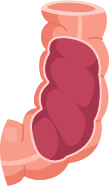
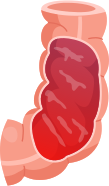
UC usually starts in the rectum and runs upward through the colon in one connected stretch. That is why the explorer shows UC as a continuous highlight rather than separate patches.
The inflamed example is redder and more irritated, matching the idea of a lining-level problem in the colon and rectum.
Crohn's disease
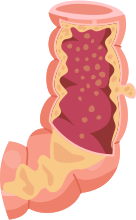
Crohn's can show up in separate areas with calmer tissue in between, and can reach deeper into the bowel wall. It can involve the small bowel, colon, and sometimes the upper tract.
The Crohn's view adds thickened wall, narrowed lumen, cobblestones, and creeping fat — why it can feel different from a surface-only problem.
Inside the gut lining
The gut is wrapped in a thin, living lining that handles digestion, acts as a barrier, and helps run the immune system. There is no single trigger for IBD — it is better understood as that lining getting caught in an ongoing inflammatory loop.
Organized and protected by mucus, quietly handling digestion and barrier work.
Swollen, sore, and leaky. A small area of lining can drive symptoms that feel far bigger than its size.
The finger-like villi shown here belong to the small bowel. UC sits in the colon and rectum; Crohn's can involve the small bowel too.
Over time
Inflammation is not all-or-nothing. Left unsettled, it tends to move along a rough path.
Smooth surface, intact barrier, immune activity quietly in the background.
The lining turns red, swollen, and leaky — pain, urgency, diarrhea, and bleeding.
Breaks open in the lining. In Crohn’s, damage can reach deeper into the bowel wall.
Repeated inflammation can leave the area thickened, narrowed, or scarred.